
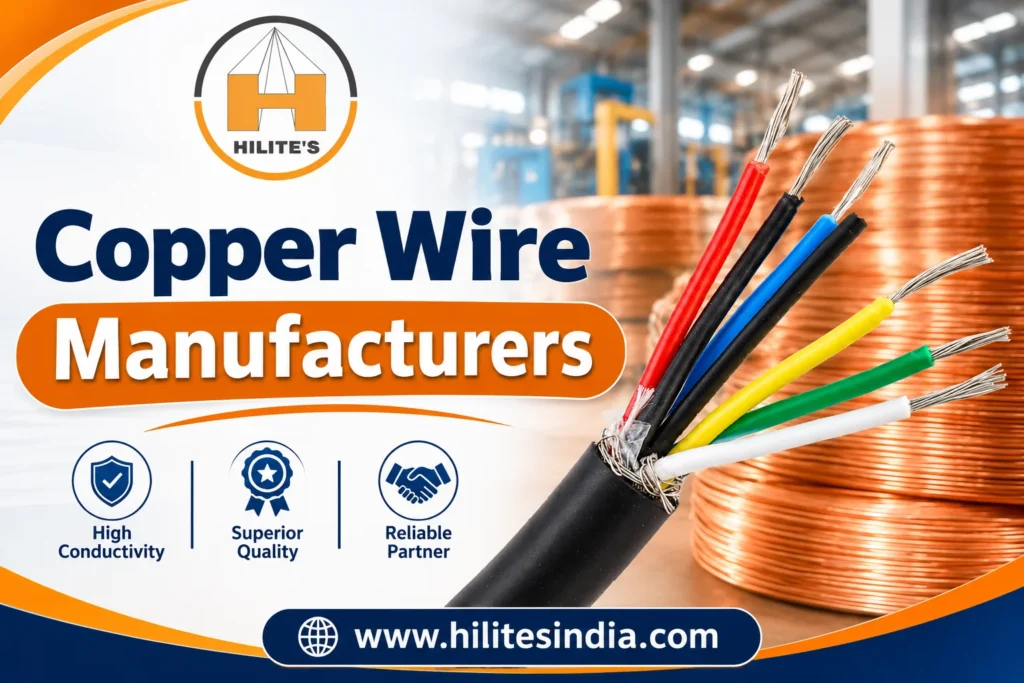
Copper conductors have importance in charging stations of electric vehicles. Why? Because they ensure efficient power transfer between the source of power, the charging station, and the vehicle. This is possible because of their excellent conductivity, low resistance, durability, and flexibility.
The demand for electric vehicles is on the rise. Therefore, the need for adequate charging stations becomes very important. Copper conductors facilitate efficient power transfer within the charging stations. To fulfil this requirement, Copper wire manufacturers play a significant role. They supply reliable conductors for electric vehicle charging stations.
Uses of Copper Wires in EV Charging Infrastructure
Copper wires are applied in different parts of EV charging infrastructure to facilitate the process of electricity transmission and operation of equipment.
1. EV Charging Cables
The purpose of EV charging cables is to connect an electric vehicle to a charging station and provide electricity supply to the car. Such cables should have conductors that could transfer the required current and at the same time be flexible enough to allow frequent handling. Thus, stranded copper wires are often used in the production of cables due to their flexibility and durability.
2. Internal Wiring of Charging Stations
There are various electrical parts inside charging stations that include the power module, circuit breaker, control unit, etc. Such parts should be connected using copper wire manufacturers that will ensure electricity flow.
3. Power Distribution Systems
Electrical connection of the incoming power supply to the distribution panels and the charging units is required in the charging stations. Copper cables, busbars, and electrical connections can be used to achieve efficient distribution of electricity. These copper conductors are quite useful especially when several vehicles need to be charged at once in the charging station.
4. DC Fast-Charging Stations
The DC fast-charging stations provide electricity in higher power than the conventional residential chargers. Higher power conductors are thus required in these DC fast-charging stations. Copper wires would be suitable since they have high conductivity and can facilitate efficient transmission of electricity in the right size.
Requirements for Performance of Copper Wires in EV Charging Infrastructures
There are certain performance requirements that copper wires used in EV charging systems should fulfil to offer efficient service.
1. High Current-Carrying Capacity
Charging infrastructures require electrical conductors that can handle the current provided with minimal temperature rise. Sizing of the conductor is thus very important.
2. Low Electrical Resistance
Low electrical resistance helps reduce energy losses and voltage drop in electricity transmission.
3. Thermal Resistance
Thermal resistance is important since charging cables and wires used within an EV charging station may become hot during operation. It is crucial that copper conductors and their insulating systems are fit for the anticipated operating temperatures and conditions.
4. Mechanical Flexibility
Electric vehicle charging cables are constantly being bent, coiled, and handled. Fine-stranded copper conductors have sufficient flexibility for regular use while at the same time ensuring reliable electrical connections.
5. Insulation
It is important that adequate insulation prevents copper conductors from moisture, wear-and-tear, environmental influences, and possible electrical contacts. Insulation should be selected according to the particular electrical requirements of the application.
6. Longevity
Electric vehicle charging stations are supposed to function regularly and long-term. The quality of copper conductors, appropriate dimensions and reliable electrical connections facilitate the proper functioning of charging infrastructure.
Conclusion
Copper wires are crucial in EV charging infrastructure. They are used in charging cables, internal station wiring, power supply systems, and DC fast charging equipment. High conductivity, flexibility, and durability make copper wires fit for modern charging networks.
With the development of the industry of electric vehicles, there will be increased demand for reliable conductors. Experienced copper wire manufacturers are able to satisfy the growing needs for conductors that satisfy electrical, thermal, and mechanical requirements.
Hilite’s India is one of the leading manufacturers of copper wire that maintains consistent product quality, accurate conductor dimensions, and suitable electrical properties. Call us for more details.