
There can be no doubt that electricity is the force that drives the modern world. It operates our homes, offices, industries, hospitals, and virtually everything else. However, no device or switch can work without the help of the power cable.
It rarely attracts our attention until there is trouble: a piece of equipment breaks down, the lights dim or flicker, overheating occurs, etc. Then we understand how important the proper selection of the cable is.
Regardless of whether you need a cable for home wiring or a commercial/industrial facility, there are certain things you should consider before purchasing. Besides, most buyers prefer cooperating with reliable Power cable manufacturers.
What Is a Power Cable?
A power cable is a special type of electric cable designed to deliver electric current from one place to another. These cables serve as power distribution devices. You can compare them with roads: the road must be properly paved or asphalted in order to ensure smooth traffic. Likewise, cables should transmit the current flawlessly and safely.
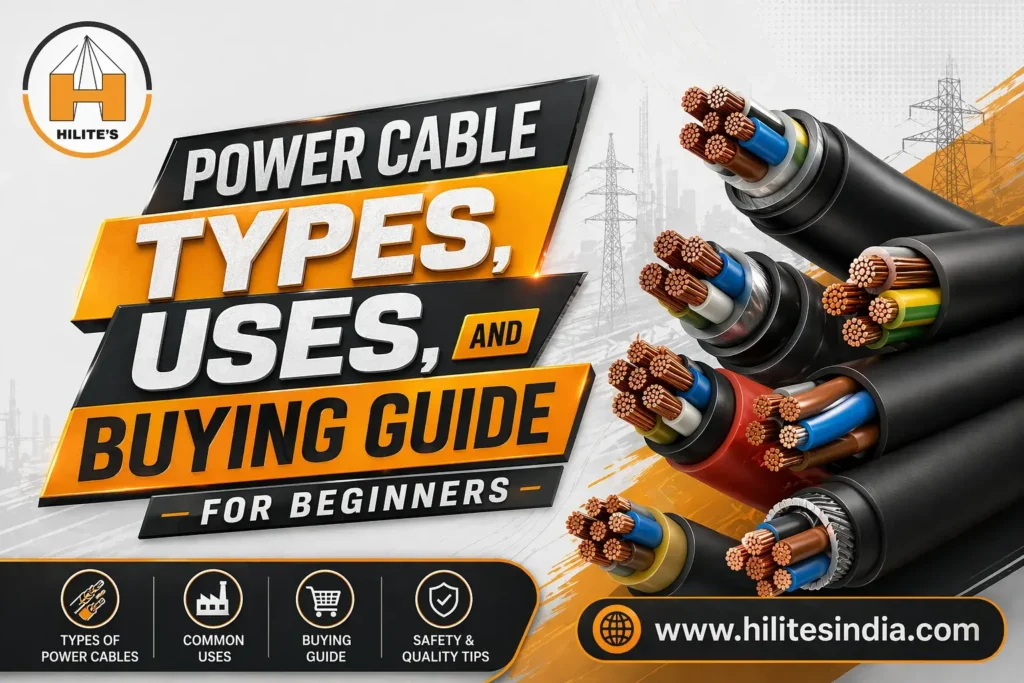
Basic Construction of a Power Cable
The most common elements of cable composition are as follows:
- Conductor: delivers electricity; usually made of copper or aluminium;
- Insulation: prevents electrical leakage and short circuiting;
- Sheath: protects from external factors such as moisture, dust, chemicals, etc.;
- Armour (if applicable): adds extra mechanical resistance.
Main Types of Power Cables
Different applications require different types of power cables.
- Low Voltage Cable: widely used in residential, commercial buildings, retail stores, small industries, etc.
- Medium Voltage Cable: suitable for industrial facilities, commercial properties, utility infrastructures, etc.
- High Voltage Cable: intended for major electric power transmission, substations, etc.
- Armored Cable: features an additional layer of protection. Used in rough terrain, underground installation, open-air environments, and others.
- Unarmored Cable: suitable for indoor installation.
- Copper Cable: recognised for excellent electrical conductivity and flexibility.
- Aluminum Cable: a relatively cheaper and lighter version.
Common Uses of Power Cables
Such cables can be found anywhere electricity is applied.
Residential Properties: In homes, cables are used for home wiring, connections, metering devices, etc.
Commercial Places: Cables are used in office premises, shopping malls, hotels, hospitals, etc.
Industrial Facilities and Machinery: Experts use power cables to provide electrical power to production lines, heavy machinery, and others.
Construction Projects: They are used in construction projects for a temporary or permanent power supply system.
Renewable Energy: Used in solar farms and other renewable energy generation plants.
Underground Connections: They are ideal for urban development projects and infrastructure.
Power Distribution Network: They are essential for power transfer within a region or a complex.
How Do Power Cables Work?
The electricity flows through the conductor. The insulation prevents it from escaping and causing accidents. The outer protective cover prevents the cable from moisture, mechanical damage, sun, and environmental effects.
In simple terms, the conductor transmits the electricity while insulation restricts it, and the outer layer protects the interior of the cable.
Beginner’s Buying Guide for Power Cable
When purchasing power cables, do not guess what would be best. You might regret that decision in the future.
- Check Voltage Rating: Take a look at the cable voltage rating according to the operating voltage. Otherwise, it will wear out fast.
- Pick a Suitable Conductor: Go for copper as it has better electrical conductivity than aluminium; the latter is cheaper.
- Correct Cable Size: Make sure you select the right size. The correct size (square millimetre value) is necessary to prevent overload.
- Inspect Insulation: Before you decide what cables to choose, it is good to inspect the insulation. The most common materials used for this purpose are:
- PVC
- XLPE
- FRLS
- Safety Certification: Check if the product is ISO, ISI, BIS certified, or another standard.
- Purchase from an Experienced Manufacturer: Usually, reliable Power cable manufacturers produce higher-quality products with better testing procedures.
Common Mistakes Made by Beginners
Many buyers make mistakes when choosing power cables. The most common ones are choosing only by price, ignoring load capacity, picking the wrong cable size, purchasing uncertified products and neglecting future development.
Quick Comparison Guide
| Feature | Copper | Aluminium |
| Conductivity | Higher | Moderate |
| Weight | Heavier | Lighter |
| Cost | Higher | Lower |
| Flexibility | Better | Lower |
| Feature | Armoured | Unarmoured |
| Protection | High | Moderate |
| Best Use | Outdoor / Underground | Indoor |
| Feature | PVC | XLPE |
| Cost | Lower | Higher |
| Heat Resistance | Standard | Better |
| Durability | Good | Excellent |
Conclusion
It is better to be familiar before purchasing a power cable since it may cost too much in the long run. The choice of a cable is based on voltage, load capacity, installation area, and other factors. Hilite’s India is one of the leading power cable manufacturers in the country. The company is committed to serving customers by bridging the gap between quality and accessibility in electrical products.